U.S. House of Representative Committee considers the No Hidden Fees on Extra Expenses for Stays (FEES) Act
On September 27, 2023, the House Energy and Commerce Subcommittee on Innovation, Data, and Commerce convened a hearing on “Proposals to Enhance Product Safety and Transparency for Americans” where H.R.___, the No Hidden Fees on Extra Expenses for Stays (FEES) was considered. In written testimony, Laura Chadwick, President and CEO of Travel Tech, expressed the organization’s general support for the bill.
“The No Hidden FEES Act is an excellent first step toward setting a national standard for resort fee transparency,” said Laura Chadwick, President and CEO of Travel Tech. “The Travel Technology Association believes travelers should be able to make informed decisions without hidden surprises or unexpected expenses. We will continue to work with Congressional leaders and travel stakeholders to improve the bill.”
Travel Tech worked closely with House Energy and Commerce Subcommittee on Innovation, Data, and Commerce leadership on the development of the legislation to ensure uniformity and certainty for hotels, short-term rentals, online ticket agents, metasearch agents, and most of all, travelers, on what mandatory fees are included in advertised pricing for lodging.
Travel Tech supports a single, national price transparency standard. Without one, a “patchwork” of state regulations, with different regulations and potential penalties, would likely emerge. This would place a significant compliance burden on the travel technology industry.
California is likely to be the first state to adopt price transparency laws since President Biden announced his efforts to end “junk fees” in his 2023 State of the Union Address. Governor Newsom has until October 14th, 2023 to sign CA Senate Bill 478 and CA Assembly Bill 537 into law. In July 2023, Travel Tech sent a letter of opposition to the California State Assembly urging legislators to hold off on taking state action to allow the federal legislative and rulemaking processes to create a uniform standard for consumer protection and lodging price display.
The Travel Technology Association (Travel Tech) empowers traveler choice by advocating for public policy that promotes marketplace transparency and competition. Travel Tech represents the leading innovators in travel technology, including online travel agencies, metasearch engines, short-term rental platforms, global distribution systems, and travel management companies.
To schedule an interview with a Travel Tech spokesperson, contact media@traveltech.org.
California Governor Newsom Set to Sign Bills Into Law, U.S. Congress to Consider Resort Fees Bill Soon
Following two votes by its state assembly the week of September 11th, California is a step closer to being the first state to adopt price transparency laws – SB 478 and AB 537– since President Biden announced his efforts to end “junk fees” in his 2023 State of the Union Address. Governor Newsom has until October 14th, 2023 to sign the legislation. Travel Tech supports a single, national price transparency standard to create uniformity and certainty for consumers, lodging operators and travel technology companies.
To assist travel technology industry members in understanding this new legislation, Travel Tech has prepared an informational memo regarding SB 478 and AB 537; current and future federal legislative and regulatory efforts regarding price transparency; and Travel Tech’s advocacy efforts on this issue.
The Travel Technology Association (Travel Tech) empowers traveler choice by advocating for public policy that promotes marketplace transparency and competition. Travel Tech represents the leading innovators in travel technology, including online travel agencies, metasearch engines, short-term rental platforms, global distribution systems, and travel management companies.
Read Travel Tech’s Free Legislative Analysis
Fill out this form to access the document:
To schedule an interview with a Travel Tech spokesperson, contact media@traveltech.org.
On Wednesday, September 20th, the Travel Technology Association (Travel Tech) submitted supplemental comments in response to supplemental comments by Airlines for America (A4A) regarding the U.S. Department of Transportation’s (DOT) proposed “Enhancing Transparency of Airline Ancillary Service Fees” rulemaking. In these comments, Travel Tech refutes A4A’s assertion that the DOT rulemaking is unnecessary.
“Travel Tech supports the Department’s rulemaking as it has rightly determined that a problem exists for consumers,” said Laura Chadwick, President and CEO, in the comments. “While fees for ancillary services aren’t mandatory, many passengers need to purchase these services. As such, consumers ought to have the ability to know and compare the true cost of their air travel before they purchase it, which includes these critical ancillary fees.”
Furthermore, in response to A4A’s claim that “a healthy market exists today,” Chadwick responds,
“Travel Tech agrees with A4A that contracts between Global Distribution Systems and airlines that include ancillaries are a positive development, but progress has been slow and incomplete and has been happening in the shadow of DOT’s repeated efforts to address the lack of pricing transparency caused by airline unbundling. Travel Tech respectfully urges that now is the time for the Department to act and to effectively address this issue.”
Travel Tech continues to advocate in support of the DOT’s proposed rule, as modified to ensure that all intermediaries who provide fare and schedule data to online ticket and travel agents receive ancillary information from airlines. Doing so will ensure consumers have transparency into the full cost of an airline ticket and won’t be surprised by hidden critical ancillary fees.
The Travel Technology Association (Travel Tech) empowers traveler choice by advocating for public policy that promotes marketplace transparency and competition. Travel Tech represents the leading innovators in travel technology, including online travel agencies, metasearch engines, short-term rental platforms, global distribution systems, and travel management companies.
To schedule an interview with a Travel Tech spokesperson, contact media@traveltech.org.
Urges Government of Canada to Modify Actions per Travel Technology Industry Concerns
“In its current state, the proposed DSTA threatens the still-active recovery of the global travel tech marketplace with ambiguous and confusing language,” wrote Laura Chadwick, President and CEO of Travel Tech. “We are eager to work with the Government of Canada to ensure the companies who are required to comply can comply.”
Travel Tech’s comments detail how the proposed DSTA should be modified:
First, the Government of Canada should increase the DSTA threshold to align with OECD Pillar One, Amount A (i.e., EUR 20BN revenue and 10% Profit Before Tax margin). In an industry based on price comparisons, this will ensure companies can maintain their critical price competitiveness.
Second, the Government of Canada should allow a credit for DST, or any similar tax, paid in another jurisdiction to avoid double taxation. As written, the language regarding revenue sourcing rules is ambiguous and confusing, therefore, this addition will ensure clarity about taxation categories.
Finally, the Government of Canada should remove the two-year retroactivity of the DST and apply it only to revenues occurred on or after the date of enactment. A tax of this magnitude should not be backward-looking, especially after years of good-faith negotiation.
Canada is pursuing a 3 percent tax on the revenues of large technology companies as OECD-member nations continue to negotiate a global approach to digital services taxes.
The Travel Technology Association (Travel Tech) empowers traveler choice by advocating for public policy that promotes marketplace transparency and competition. Travel Tech represents the leading innovators in travel technology, including online travel agencies, metasearch engines, short-term rental platforms, global distribution systems, and travel management companies.
To schedule an interview with a Travel Tech spokesperson, contact media@traveltech.org.
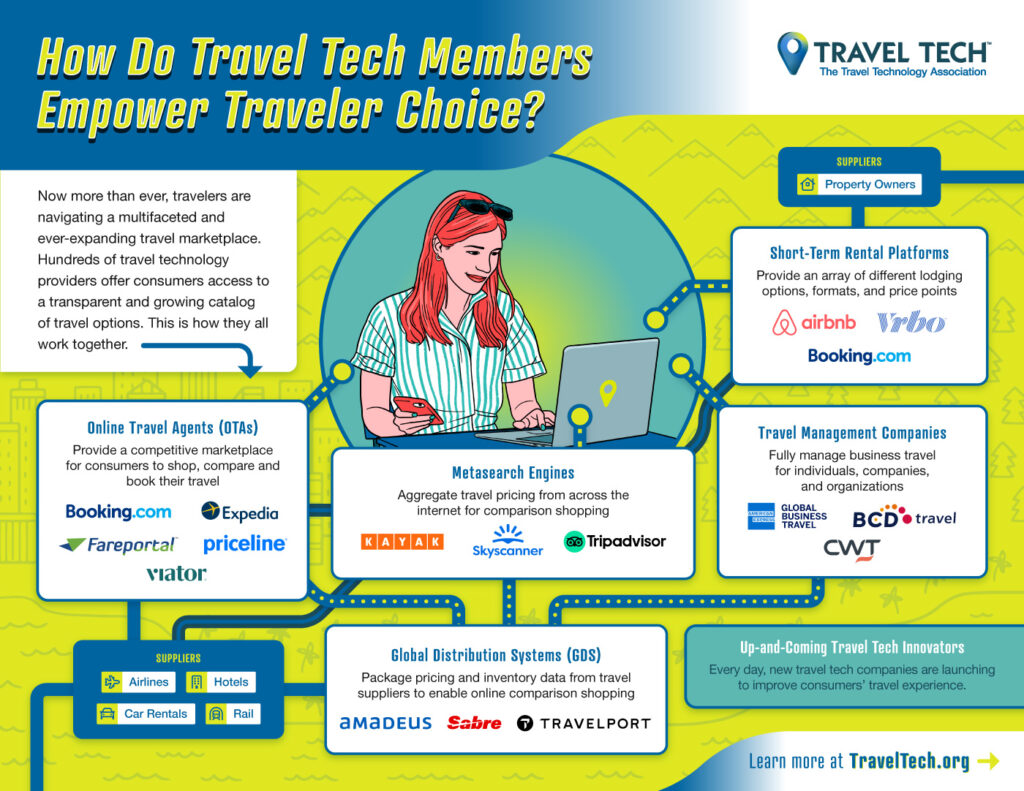
As part of its mission to promote transparency and competition in the travel marketplace through education and advocacy, the Travel Technology Association has developed an infographic demonstrating how different travel tech industry segments empower traveler choice.
Travel Tech’s new infographic was released as part of the organization’s updated website launch. The site now features a new, modernized Travel Tech logo, in-depth policy briefs on Travel Tech priority issues, and a new Policy Action Center, which provides industry members with a tool to communicate directly with their elected representatives.
Ahead of the return of Congress to Washington, D.C. next week, Travel Tech has met with U.S. Senate offices to discuss the airline refund obligations of ticket agents. Late last year, the U.S. Department of Transportation (DOT), in its proposed Airline Ticket Refunds and Consumer Protections rulemaking, sought to require ticket agents to refund customers within seven days, even if the airline had not yet returned the funds.
“Simply put: our members can only refund what they have in their possession. The DOT’s proposed rule on the timing of refunds places ticket agents in a precarious financial position, no matter their size, having to make refunds without first receiving the customers’ funds back from airlines,” said Laura Chadwick, president & CEO of Travel Tech.
“We were pleased the House Transportation and Infrastructure Committee heard us and included this sensible provision in their bill,” Chadwick continued. “We are continuing our efforts to secure a similar provision in the U.S. Senate’s FAA Reauthorization.”
As it stands today, the authorization for the Federal Aviation Administration (FAA) will expire on September 30, 2023. The Senate Commerce, Science and Transportation Committee has not yet considered or cleared its FAA Reauthorization legislation due to an ongoing impasse over pilot training requirements.
Travel Tech Will Share How Industry Members Can Advocate for Pro-Innovation Public Policies
The Travel Technology Association (Travel Tech), the voice of the travel technology industry and consistent advocate for public policy that supports a competitive and transparent marketplace, will sponsor the annual Phocuswright Conference, being held in Ft. Lauderdale, Florida, from November 13-16. This year’s theme — “You, Me & The Machine” — was recently announced.
“We are so pleased to be a part of the Phocuswright Conference this year and welcome its focus on artificial intelligence,” said Laura Chadwick, president & CEO of Travel Tech. “Policymakers in Washington, DC are seeking to regulate this technology in ways that will directly impact the travel sector. We will be at the conference to share how industry members can advocate for pro-innovation public policies on this topic and others.”
As part of its sponsorship, Travel Tech will host a booth in the Exhibit Showcase. Let us know if you will be attending Phocuswright and are interested in learning how to advocate for pro-innovation public policies for the travel tech industry:
Advancing Policy Priorities for Industry Supporting Ticket Agents and Traveler Choice
[Arlington, VA] [August 23, 2023] – The Travel Technology Association (Travel Tech), the voice of the travel technology industry and consistent advocate for public policy that supports a competitive and transparent marketplace, announced Sabre Corporation has rejoined the organization as a board member. Sabre Corporation is a travel technology company based in Southlake, Texas. It is the largest global distribution systems provider in North America.
“I am proud to welcome back Sabre as a Travel Tech board member,” stated Laura Chadwick, president and CEO of Travel Tech. “Given the resurgence of interest in travel post-pandemic by both consumers and policymakers alike, our advocacy on behalf of the travel technology industry has become all the more essential to empower traveler choice.”
“The Sabre team looks forward to working alongside travel tech pioneers and policymakers to promote the growth and continued success of the travel technology industry,” stated Ann Bruder, executive vice president and chief legal officer of Sabre. “Travel Tech’s education and advocacy efforts are key to ensuring public policy supports a competitive, transparent, and innovative travel marketplace.”
Global distribution systems (GDSs) are the travel industry data networks that connect service providers (airlines, hotels, cruises, car rental companies, tour companies) with travel agents. Through real-time, automated transactions, these companies help consumers book more than 60 million hotel rooms, 50% of all flights worldwide, and countless cruises, car rentals, and tours. These companies also provide IT services to airlines, airports, hotels, and other hospitality organizations.
In October 2023, Travel Tech will make a special announcement about its plan to expand its membership. More information on this and other industry insights are available by subscribing to Travel Tech’s free, weekly Passport Newsletter.
###
About Travel Tech
The Travel Technology Association (Travel Tech) empowers traveler choice by advocating for public policy that promotes marketplace transparency and competition. Travel Tech represents the leading innovators in travel technology, including online travel agencies, metasearch engines, short-term rental platforms, global distribution systems, and travel management companies.
To schedule an interview with a Travel Tech spokesperson, contact media@traveltech.org.
About Sabre Corporation
Sabre Corporation is a leading software and technology company that powers the global travel industry, serving a wide range of travel companies including airlines, hoteliers, travel agencies and other suppliers. The company provides retailing, distribution and fulfilment solutions that help its customers operate more efficiently, drive revenue and offer personalized traveler experiences. Through its leading travel marketplace, Sabre connects travel suppliers with buyers from around the globe. Sabre’s technology platform manages more than $260B worth of global travel spend annually. Headquartered in Southlake, Texas, USA, Sabre serves customers in more than 160 countries around the world.
Advocating for Federal Legislation Creating Uniform National Privacy Standards
[Arlington, VA] [August 15, 2023] — The Travel Technology Association (Travel Tech), the voice of the travel technology industry and consistent advocate for public policy that supports a competitive and transparent marketplace, announced it has joined the United for Privacy: End the Patchwork coalition. The purpose of the coalition is to advocate for comprehensive federal privacy legislation that creates a uniform national standard, preempts state law, and ends the privacy patchwork of various state regulations.
“Travel Tech’s members are committed to protecting the personal information of their customers. Trust and transparency are critical in the online travel marketplace, and our members strive every day to meet and surpass consumers’ expectations regarding the use of their personal information,” stated Laura Chadwick, president and CEO of Travel Tech. “However, without clarity and consistency of policy or regulation, innovation is disrupted and marketplace confusion results.”
“We look forward to working with the United for Privacy coalition to advocate for Congress to pass a national framework, consistent across all states and jurisdictions, that effectively preempts state consumer privacy and data security laws,” Chadwick continued. “A comprehensive national data privacy framework will allow businesses and consumers to transact more safely, effectively, fairly, and efficiently.”
Travel Tech joins several leading trade associations in support of the United for Privacy coalition, including the Business Roundtable, US Chamber of Commerce, Consumer Technology Association, NetChoice, and others.
###
The Travel Technology Association (Travel Tech) empowers traveler choice by advocating for public policy that promotes marketplace transparency and competition. Travel Tech represents the leading innovators in travel technology, including online travel agencies, metasearch engines, short-term rental platforms, global distribution systems, and travel management companies.
To schedule an interview with a Travel Tech spokesperson, contact media@traveltech.org.
With the recent debut of Apple’s Vision Pro, its new long-awaited augmented and virtual reality headset, interest in the use of immersive technologies – collectively known as “XR” — to support travelers and travel companies alike continues to grow. This cutting-edge technology has the potential to:
Enhance travel discovery by allowing consumers to experience resort accommodations and tourist attractions before they book
In this special Travel Tech webinar, learn more from Cortney Harding, a leading authority on emerging technologies and CEO of the award-winning Friends with Holograms XR creative agency. Harding introduces augmented and virtual reality, how she’s seen the technology grow and develop over the past few years and discusses the potential for XR in the travel industry.
“Ensuring our member companies have a seat at the policymaking table is core to Travel Tech’s mission as the industry’s trade association,” said Laura Chadwick, president & CEO. “Whether it’s at the U.S. Department of Transportation, in the halls of Congress or across the country with state and local policymakers, we make our members’ voices heard as legislation and regulations are developed.”
Like all federal advisory committees, ACPAC provides leaders at the U.S. Department of Transportation (DOT) with access to information and advice on a broad range of issues affecting federal policies and programs. ACPAC was established by Section 411 of the 2012 FAA Reauthorization Act to “advise the Secretary in carrying out activities relating to airline customer service improvements.” Learn more about ACPAC’s past meetings and recommendations.
Membership on ACPAC is set by statute and requires an act of Congress to add a new member. Current membership is limited to a representative from four different groups: air carriers; airport operators; state or local governments with expertise in consumer protection matters; and nonprofit public interest groups with expertise in consumer protection matters.
However, one major group involved in the sale of air transportation and associated consumer protection issues – ticket agents – was inexplicably omitted when the ACPAC was established.
Adding ticket agents to ACPAC will better equip the advisory committee to address growing airline customer service issues. Online ticket agents sell approximately 50% of all airline tickets to consumers every year, putting them in the distinctive position to share a deep knowledge and understanding of refunds, ancillary fees, and cutting-edge technology.
Travel Technology Industry Advocates for Transparency, Supporting Traveler Choice
“Promoting transparency is a top priority for the Travel Technology Association and its members. It is essential that travelers make informed decisions without hidden surprises or unexpected expenses. When travelers have complete pricing details, they can accurately compare different options and make choices that align with their preferences and budget,” stated Laura Chadwick, President and CEO of Travel Tech.
“Public policy that supports clear and upfront information about the total cost of travel early in the planning process and across all booking and advertising channels encourages competitive pricing practices. There should be a single national standard that will create uniformity and certainty for lodging operators, travel technology companies, and most of all, travelers, who will have a better understanding of what is included in advertised prices.
“We look forward to working with Senators Klobuchar and Moran on the Hotel Fees Transparency Act to ensure travelers have the ability to accurately compare different options and make choices that best suit their preferences.”
###
The Travel Technology Association (Travel Tech) empowers traveler choice by advocating for public policy that promotes marketplace transparency and competition. Travel Tech represents the leading innovators in travel technology, including online travel agencies, metasearch engines, short-term rental platforms, global distribution systems, and travel management companies.
To schedule an interview with a Travel Tech spokesperson, contact media@traveltech.org.
Inclusion of Travel Technology Industry Priorities Support Travelers and Industry Members
On Thursday, July 20th, the Travel Technology Association (Travel Tech), the voice of the travel technology industry and consistent advocate for public policy that supports a competitive and transparent marketplace, praised legislators for advancing H.R. 3935, the Securing Growth and Robust Leadership in American Aviation Act through the U.S. House of Representatives.
“We are also especially grateful to Rep. Dina Titus and Rep. Gus Bilirakis, chairs of the House Travel & Tourism Caucus, along with Reps. John Garamendi, Marco Molinaro, and Susan Brownley for introducing H.R. 3780, the ACPAC Modernization Act,” said Chadwick. “Due to Rep. Titus’s leadership, ticket agents are one step closer to being able to offer their unique expertise on improving airline customer service.”
H.R. 3780, the ACPAC Modernization Act, was merged into the House-passed FAA Reauthorization bill (H.R. 3935). It will add a ticket agent representative to the U.S. Department of Transportation’s (DOT) Aviation Consumer Protection Advisory Committee (ACPAC).
Prior to the House vote on H.R. 3935, Travel Tech sent a letter to Congress to express its support for the legislation. Travel Tech’s letter, however, noted its opposition to the inclusion of Section 701 of the bill, which repeals the DOT’s long-standing Full Fare Advertising Rule. This rule requires that the entire price for airfare, including taxes and fees, be disclosed to consumers in the first instance following an itinerary search.
Laura Chadwick, Travel Tech’s President & CEO, argued that “Its repeal will undermine consumers’ ability to effectively comparison shop and choose the best travel option to meet their needs and budget.”
###
The Travel Technology Association (Travel Tech) empowers traveler choice by advocating for public policy that promotes marketplace transparency and competition. Travel Tech represents the leading innovators in travel technology, including online travel agencies, metasearch engines, short-term rental platforms, global distribution systems, and travel management companies.
To schedule an interview with a Travel Tech spokesperson, contact media@traveltech.org.
On Wednesday, July 19th, the Travel Technology Association (Travel Tech) sent a letter to Congress to express its support for H.R. 3935, the Securing Growth and Robust Leadership in American Aviation Act, in advance of the U.S. House of Representatives’ vote on the legislation later this week. H.R. 3935 will reauthorize the Federal Aviation Administration (FAA) and related aviation programs for the next five years. It includes several key provisions sought by Travel Tech to improve airline travel for consumers and support the Travel Tech member companies that serve them.
Travel Tech’s letter, however, noted its opposition to the inclusion of Section 701 of the bill, which repeals the DOT’s long-standing Full Fare Advertising Rule. This rule requires that the entire price for airfare, including taxes and fees, be disclosed to consumers in the first instance following an itinerary search. Laura Chadwick, Travel Tech’s President & CEO, argued that, “Its repeal will undermine consumers’ ability to effectively comparison shop and choose the best travel option to meet their needs and budget.”
On Thursday, July 13th, Laura Chadwick, President & CEO of the Travel Technology Association, was featured alongside John Breyault from the National Consumers League in an NBC News story about efforts to repeal the Full Fare Advertising Rule. Under the current rule, the Department of Transportation (DOT) requires any advertised airfare to include the total cost to the consumer for the ticket, including all applicable government taxes/fees and any mandatory carrier-imposed surcharges. However, a provision in the House FAA Reauthorization bill would eliminate this requirement and instead allow airlines to advertise ticket prices without including government taxes and other required fees.
Chadwick and Breyault both expressed concerns over efforts to change this rule. As Chadwick stated, “You can’t comparison shop on the checkout page. It’s essential to put that information up front, the first place where consumers see the airfare.”
“Travel is expensive,” Chadwick also said. “We believe consumers should have the most information upfront so they can make effective decisions, comparison shop for the best value, and feel good about their purchases in the end.”
The Travel Technology Association (Travel Tech) empowers traveler choice by advocating for public policy that promotes marketplace transparency and competition. Travel Tech represents the leading innovators in travel technology, including global distribution systems, online travel agencies, metasearch companies, travel management companies, and short-term rental platforms.
To schedule an interview with a Travel Tech spokesperson, contact media@traveltech.org.
New Staff Members Added to Lead Advocacy, Support Membership Growth
[Arlington, VA] [July 13, 2023] – The Travel Technology Association (Travel Tech), the voice of the travel technology industry and consistent advocate for public policy that supports a competitive and transparent marketplace, has hired Nicole Brewin and Bethany Reitsma to support its public policy advocacy and membership growth initiatives.
Brewin joins Travel Tech from the Railway Supply Institute (RSI), where she led its government affairs practice for over two decades. In that capacity, Brewin built RSI’s advocacy program into the organization’s largest team, secured historic investment levels for rail grants in the Infrastructure Investment and Jobs Act (IIJA), and created its Political Action Committee, where she tripled its annual fundraising efforts. Prior to her work at RSI, Brewin worked as a Legislative Assistant for Congressman Peter Visclosky (IN-01.)
“I am so pleased to welcome Nicole to Travel Tech. Not only is she a transportation policy pro, Nicole is also an expert in working closely with trade association member companies. I look forward to working with her to expand Travel Tech’s advocacy efforts to empower traveler choice and support our growing membership.”
Bethany Reitsma is Travel Tech’s new Industry Relations Manager. Reitsma manages marketing, communications, and public policy projects and supports the association’s membership growth initiatives. Prior to joining Travel Tech in February, Reitsma worked for the XR Association as its Marketing & Membership Coordinator, where she led membership recruitment efforts, developed and executed its grassroots advocacy strategy, and co-managed member communications.
“While innovations, advancements, and change are to be expected in the world of travel technology, our Association’s commitment to promoting transparency and competition through education and advocacy remains consistent,” Chadwick said. “Travel Tech supports its members to address both policy changes and challenges. I am excited to lead Travel Tech with Nicole and Bethany by my side.”
Brewin holds a bachelor’s degree in political science & history from Marymount University. Reitsma earned her bachelor’s degree in politics & philosophy at Washington & Lee University.
About Travel Tech
The Travel Technology Association (Travel Tech) empowers traveler choice by advocating for public policy that promotes marketplace transparency and competition. Travel Tech represents the leading innovators in travel technology, including online travel agencies, metasearch engines, short-term rental platforms, global distribution systems, and travel management companies.
Travel Tech’s Brand Refresh Keeps Industry Leaders and Policymakers Informed and Engaged
[Arlington, VA] [July 12, 2023] – The Travel Technology Association (Travel Tech), the voice of the travel technology industry and consistent advocate for public policy that supports a competitive and transparent marketplace, announced today the launch of its new website. The site features a new, modernized Travel Tech logo, in-depth policy briefs on Travel Tech priority issues, and a new Policy Action Center, which provides industry members with a tool to communicate directly with their elected representatives.
“Right now, in Washington, DC and states across the country, policymakers are debating policies that directly impact the travel technology industry,” said Travel Tech CEO and President Laura Chadwick. “Travel Tech’s new website highlights the critical advocacy work we lead on topics like ancillary fees, airline refunds, price transparency, short-term rentals, customer reviews, and more. I welcome industry members to learn more at www.traveltech.org and get involved with our efforts to empower traveler choice and protect travel tech innovation.”
In addition to the site and its new features, Travel Tech is relaunching its PassportNewsletter on a weekly basis to keep industry leaders up-to-date on current and emerging policy issues facing the travel tech industry. In addition to the latest about Travel Tech and its advocacy, Passport Newsletter will offer a news digest of the top stories at the intersection of travel, technology, and public policy. To subscribe, click here: https://traveltech.org/subscribe/
Travel Tech’s new Policy Action Center features its inaugural “Action Alert” asking industry members to tell their member of Congress to co-sponsor H.R. 3780, the ACPAC Modernization Act, which would add “Ticket Agents” to the U.S. Department of Transportation’s Aviation Consumer Protection Advisory Committee (ACPAC). This is one of Travel Tech’s major priorities for the FAA Reauthorization, legislation that must pass Congress by September 30th.
Congresswoman Dina Titus (D, NV-01) and Congressman Gus Bilirakis (R, FL-12), chairs of the House Travel & Tourism Caucus, along with Rep. Marc Molinaro (R, NY-19), Rep. John Garamendi (D, CA-08), and Rep. Julia Brownley (D, CA-26), introduced H.R. 3780, the ACPAC Modernization Act on June 1st.
About Travel Tech
The Travel Technology Association (Travel Tech) empowers choice by advocating for public policy promoting marketplace transparency and competition. Travel Tech represents the leading innovators in travel technology, including global distribution systems, online travel agencies, metasearch companies, travel management companies, and short-term rental platforms.
To schedule an interview with a Travel Tech spokesperson, contact media@traveltech.org.
Travel Tech President & CEO Laura Chadwick recently shared her thoughts on how trade associations can build community to enhance their advocacy work in an Association 100 video.
“When I think about ROI for the Travel Tech Association,” said Chadwick, “no doubt we want to be that force in advocacy … but I’m also thinking about community and how can we bring people together.”
Find the full interview on YouTube, where Ms. Chadwick also addressed efforts to reaffirm the mission, vision, and values of an association and the keys to successful association leadership.
Key Provisions Impacting the Travel Technology Industry Included
The Travel Technology Association (Travel Tech), the voice of the travel technology industry and consistent advocate for public policy that supports a competitive and transparent marketplace, applauds the introduction of the House and Senate’s FAA Reauthorization bills.
“We thank the leaders of the House Transportation & Infrastructure Committee and the Senate Commerce Committee for their exceptional efforts on the FAA Reauthorization. Travel Tech released its top priorities for this legislation earlier this year. Both bills feature key provisions that we expressly advocated for to better support travelers and the Travel Tech member companies that serve them,” stated Laura Chadwick, president, and CEO of Travel Tech.
The House legislation includes critical language relating to the refund obligations of ticket agents, a top Travel Tech priority. The U.S. Department of Transportation (DOT), in its proposed Airline Ticket Refunds and Consumer Protections rulemaking released late last year, sought to require ticket agents to make refunds to customers within seven days, even if the funds had not yet been returned by the airline. Travel Tech successfully advocated for bill language that would require a refund only when such ticket agent possesses, or has access to, the funds of a passenger.
“Simply put: our members can only refund what they have in their possession. The DOT’s proposed rule on the timing of refunds places ticket agents in a precarious financial position, no matter their size, having to make refunds without first receiving the customers’ funds back from airlines. We are glad the House Transportation and Infrastructure Committee heard us and included this sensible provision in their draft bill. We will work hard to ensure this provision and our other priorities are included in the final legislation passed by Congress.”
The House version of the FAA Reauthorization legislation will also add a “ticket agent” representative to the Department of Transportation’s (DOT) Aviation Consumer Protection Advisory Committee (ACPAC). Last week, Reps. Dina Titus (D-NV), Gus Bilirakis (R-FL), John Garamendi (D-CA), Marc Molinaro (R-NY), and Julia Brownley (D-CA), introduced standalone legislation, H.R. 3780 — the ACPAC Modernization Act, to do the same.
“We’re pleased to be included as a formal representative on ACPAC as well the new Passenger Experience Advisory Committee,” Chadwick said. “This recognition of the travel technology industry’s unique expertise comes at a critical time and reinforces the pivotal role our members contribute to enhancing the travel experience.”
“We are also grateful to see our point of view on ancillary fee display flexibility affirmed in the Senate legislation. Our members are the pioneers in consistently supporting consumer access to information to allow them to make informed decisions and know the total costs involved as they make travel plans,” stated Chadwick.
Earlier this year, Travel Tech submitted comments to the U.S. Department of Transportation on their proposed “Enhancing Transparency of Airline Ancillary Service Fees” rulemaking. Travel Tech also filed a hearing petition to challenge the DOT’s requirement in the rule to display the critical ancillary fee information on the first page of online search results, and presented key public opinion survey results to support their position.
About Travel Tech
The Travel Technology Association (Travel Tech) empowers traveler choice by advocating for public policy that promotes marketplace transparency and competition. Travel Tech represents the leading innovators in travel technology, including global distribution systems, online travel agencies, metasearch companies, travel management companies, and short-term rental platforms.
To schedule an interview with a Travel Tech spokesperson, contact media@traveltech.org.
On Monday, June 5th, the Travel Technology Association (Travel Tech), launched its new Travel Tech Policy Action Center to offer industry members a means to communicate directly with their elected representatives and show support for key Travel Tech public policy priorities.
The inaugural action asks industry members to tell their member of Congress to co-sponsor H.R. 3780, the ACPAC Modernization Act, which would add “Ticket Agents” to the U.S. Department of Transportation’s Aviation Consumer Protection Advisory Committee (ACPAC). This is one of Travel Tech’s major priorities for the FAA Reauthorization legislation that must pass Congress by September 30th.
Congresswoman Dina Titus (D, NV-01) and Congressman Gus Bilirakis (R, FL-12), chairs of the House Travel & Tourism Caucus, along with Rep. Marc Molinaro (R, NY-19), Rep. John Garamendi (D, CA-08), and Rep. Julia Brownley (D, CA-26), introduced H.R. 3780, the ACPAC Modernization Act on June 1st.
About Travel Tech
The Travel Technology Association (Travel Tech) empowers traveler choice by advocating for public policy that promotes marketplace transparency and competition. Travel Tech represents the leading innovators in travel technology, including global distribution systems, online travel agencies, metasearch companies, travel management companies, and short-term rental platforms.
To schedule an interview with a Travel Tech spokesperson, contact media@traveltech.org.
ACPAC Modernization Act Will Benefit Consumers and Lead to Better DOT Policy
The Travel Technology Association (Travel Tech), the voice of the travel technology industry and consistent advocate for public policy that supports a competitive and transparent marketplace, applauds the introduction of legislation today that would add ticket agent representatives to the Department of Transportation’s (DOT) Aviation Consumer Protection Advisory Committee (ACPAC).
The legislation, introduced by Reps. Dina Titus (D-NV), Gus Bilirakis (R-FL), John Garamendi (D-CA), Marc Molinaro (R-NY) and Julia Brownley (D-CA), would allow ACPAC to garner the unique and critical perspectives of ticket agents who support millions U.S. of travelers.
It’s why earlier this year, Travel Tech stated its primary policy priority as part of the FAA Reauthorization Act was to have Congress “amend the law to add a Ticket Agent representative to ACPAC to expand its industry knowledge base and improve the quality of its recommendations, ultimately benefiting consumers.” The term “Ticket Agent” is defined in law as “a person (except an air carrier, a foreign air carrier, or an employee of an air carrier or foreign air carrier) that as a principal or agent sells, offers for sale, negotiates for, or holds itself out as selling, providing, or arranging for, air transportation.” (49 U.S.C. § 40102(a)(45)).
In response to the introduction of this important legislation, Laura Chadwick, president CEO of Travel Tech, stated:
“On behalf of Travel Tech’s membership, I am grateful to Rep. Dina Titus and Rep. Gus Bilirakis, chairs of the House Travel & Tourism Caucus, along with Reps. John Garamendi, Marco Molinaro, and Susan Brownley for introducing the ACPAC Modernization Act. By adding ticket agents to the US Department of Transportation’s (DOT) Aviation Consumer Protection Advisory Committee (ACPAC), Congress will better equip the advisory committee to address growing airline customer service issues.
Online ticket agents sell approximately 50% of all airline tickets to consumers every year, putting them in the distinctive position to share a deep knowledge and understanding of refunds, ancillary fees, and cutting-edge technology. Our important perspective has been missing at ACPAC. The technical expertise and long-standing commitment to innovation by Travel Tech members will strengthen efforts to support airline customers.”
ACPAC represents the nearly 700 million airline passengers that fly in the U.S. each year. Unlike many other federal consumer-focused advisory groups, the committee is currently comprised of just four members – an air carrier representative, an airport operator, a state or local government representative, and a consumer advocate.
About Travel Tech
The Travel Technology Association (Travel Tech) empowers traveler choice by advocating for public policy that promotes marketplace transparency and competition. Travel Tech represents the leading innovators in travel technology, including global distribution systems, online travel agencies, metasearch companies, travel management companies, and short-term rental platforms.
To schedule an interview with a Travel Tech spokesperson, contact media@traveltech.org.
On Tuesday, May 16th, Laura Chadwick, Travel Tech’s President & CEO, served as a panelist on airline consumer protections at the Consumer Assembly event hosted by the Consumer Federation of America. Chadwick spoke alongside panelists Heather Ansley, Associate Executive Director of Government Relations at the Paralyzed Veterans of America, and John Breyault, Vice President of Public Policy, Telecommunications and Fraud at the National Consumers League, and moderator Lori Aratani, reporter at the Washington Post. Chadwick acknowledged the pandemic’s exacerbating effect on pre-existing issues for air travel consumers and shared how Travel Tech works to solve these issues by advocating for public policy that supports transparency and competition to empower traveler choice. Chadwick detailed Travel Tech’s efforts to educate policymakers about ticket agent concerns regarding the U.S. Department of Transportation’s ongoing rulemakings on ancillary fees and refunds and the upcoming FAA reauthorization by Congress.
###
About Travel Tech
The Travel Technology Association (Travel Tech) empowers traveler choice by advocating for public policy promoting marketplace transparency and competition. Travel Tech represents the leading innovators in travel technology, including global distribution systems, online travel agencies, metasearch companies, travel management companies, and short-term rental platforms.
To schedule an interview with a Travel Tech spokesperson, contact media@traveltech.org.
At the recent U.S. Department of Transportation (DOT) hearing on its proposed “Enhancing Transparency of Airline Ancillary Service Fees” regulation, Laura Chadwick, Travel Tech President and CEO, submitted a coalition letter signed by U.S. Travel, the U.S. Chamber of Commerce, the American Society of Travel Advisors (ASTA), the Global Business Travel Association (GBTA), Hopper, and Sabre to express their shared concerns about the proposed rule’s first-page search results requirement. Chadwick noted during her testimony that this letter demonstrates “in one document the many stakeholders who take issue with this part of the proposed rule.” Recently, the Computer & Communications Industry Association (CCIA) joined this letter as a signatory as well.
Across their written comments to the Department, these organizations detailed how the mandatory inclusion of ancillary fee information on the first-page of search results would negatively impact consumers. In the letter submitted by Chadwick, they collectively ask the Department to allow for flexibility and innovation in how ancillary fee information is presented to consumers so long as it is early in the purchase process.
Federal Advisory Committee Lacks Ticket Agent Representative
The Travel TechnologyAssociation (Travel Tech) submitted supplemental comments regarding the U.S. Department of Transportation’s (DOT) proposed “Enhancing Transparency of Airline Ancillary Service Fees” rulemaking. In these comments, Travel Tech provided its response to the recommendations made by the Aviation Consumer Protection Advisory Committee and recent survey findings cited by Laura Chadwick, Travel Tech President & CEO, during the Department’s recent hearing on the proposed rule.
In its supplemental filing, Travel Tech responded to ACPAC’s recommendations regarding the DOT’s proposed rules on ancillary fees; GDS access to ancillary fee information; change and cancellation rules; data sharing; and proposed compliance timeline. You can read Travel Tech’s supplemental filing here.
“Travel Tech welcomes every opportunity to share our knowledge about empowering traveler choice in written comments, presentations, meetings, testifying, and beyond,” said Chadwick. “Our member companies are the foremost experts in supporting millions of consumers every year in their travel planning. The input we provide is not only effective but technically feasible too. It will lead to better travel experiences for all.”
The DOT’s Aviation Consumer Protection Advisory Committee (“ACPAC”) convened on January 12, 2023, to make recommendations on the Department’s “Enhancing Transparency of Airline Ancillary Service Fees” rulemaking. Membership of ACPAC is limited by law to four representatives: an air carrier representative; an airport operator; a law enforcement officer; and a consumer advocate.
Travel Tech continues to advocate that a Ticket Agent representative be added to the membership of ACPAC. Doing so will expand the advisory committee’s industry knowledge base and improve the quality of its recommendations. In a recent white paper on its 2023 FAA Reauthorization priorities, Travel Tech advocates that Congress amend the law governing ACPAC membership.
“New ideas and perspectives are needed right now to improve airline travel for consumers. Ticket agents, which include online ticket agents and metasearch engines represented by Travel Tech, can offer ACPAC deep technical expertise and long-standing commitment to innovation,” said Chadwick.
About Travel Tech
The Travel Technology Association (Travel Tech) empowers traveler choice by advocating for public policy that promotes marketplace transparency and competition. Travel Tech represents the leading innovators in travel technology, including global distribution systems, online travel agencies, metasearch companies, travel management companies, and short-term rental platforms.
To schedule an interview with a Travel Tech spokesperson, contact media@traveltech.org.
Advocates for Ancillary Fee Website Display Flexibility
The hearing, separately petitioned for by both Travel Tech and Airlines for America, focused entirely on the proposed rule’s requirement that critical ancillary fees must be shown on the first page of search results alongside fare and schedule information. Today, additional optional services, including checked bags, specific seat selection, and carry-on bags, are presented to consumers early in the flight search process.
“Travel Tech firmly believes that our member companies are best positioned to innovate and determine how ancillary fee information should be presented to consumers,” stated Chadwick. “In addition to our written comments and those of our members, we pursued this hearing because we are concerned about the deep impact this proposed first-page search results requirement would have on consumers. This is especially true for those shopping on travel comparison sites that display hundreds of flight combinations across a multitude of different airlines.”
In its rationale for the proposed first-page search results requirement, the DOT cited that “because most passengers travel once per year or less, they may not be aware of certain ancillary service fees, such as those related to seat selection.” However, in an online survey commissioned by Travel Tech of over 1,000 U.S. American adult consumers from March 24-26, it was found that:
Nearly 90% of all U.S. adults know they may have to pay additional fees for optional services beyond the cost of their airline ticket, including Baby Boomers at 92% and 87% of the so-called “Silent Generation” (adults aged 78-95).
60% of U.S. adults have used travel comparison sites, and of those who likely use Travel Tech member websites, 96% of consumers know they may have to pay additional fees for optional services (e.g., checked bags, specific seat selection, carry-on bag, etc.) beyond the cost of their ticket.
Consumers’ satisfaction with travel comparison sites was closely tied to how fares are currently presented on these sites and their ability to get relevant flight information quickly and easily.
Chadwick, in her testimony, observed that, “Consumers know that critical ancillary fees are now a part of travel – they expect these fees and know that they are optional services and not required. There are no surprises here. As such, there is no need to overload the first-page search results with the extra information this rule would require.”
Hearing witnesses from Travel Tech member companies Amadeus, Priceline (as part of Booking Holdings), and Skyscanner shared their expertise with the DOT, testifying to the technical infeasibility of the proposed first-page search results requirement. Their testimony, along with other witnesses, can be accessed here.
###
About Travel Tech
The Travel Technology Association (Travel Tech) empowers traveler choice by advocating for public policy that promotes marketplace transparency and competition. Travel Tech represents the leading innovators in travel technology, including global distribution systems, online travel agencies, metasearch companies, travel management companies, and short-term rental platforms.
To schedule an interview with a Travel Tech spokesperson, contact media@traveltech.org.
Testimony of Laura Chadwick, President, and CEO Travel Tech
March 30, 2023 – Public Hearing – U.S. Department of Transportation’s Notice of Proposed Rulemaking on Enhancing Transparency of Airline Ancillary Service Fees
TOPIC 1
Whether Consumers Are or Are Likely To Be Substantially Injured or Misled by Airlines’ Current Disclosures of Ancillary Service Fees
I am Laura Chadwick, president and CEO of the Travel Technology Association, also known as “Travel Tech.” Our mission is to empower traveler choice. To do so, we bring together travel innovators to promote transparency and competition through education and advocacy. Our members include online ticket agents, metasearch engines, global distribution systems, travel management companies, and short-term rental platforms. I am proud to be a witness today alongside member companies Priceline, as part of Booking Holdings, Skyscanner, and Amadeus.
Thank you to the Department for granting Travel Tech’s petition for this hearing to discuss the proposed “Enhancing Transparency of Airline Ancillary Service Fees” rule, specifically regarding its requirement that critical ancillary fees must be shown on the first page of search results. We took this extra step of filing this hearing petition because we strongly hold that Travel Tech member companies are best positioned to determine how ancillary fee information should be presented to consumers. You will hear from three experts from Travel Tech member companies later today who testify to the intense efforts that their companies pursue to serve the needs of their consumers.
Travel Tech, as it did in 2014, supports this rulemaking. Advocating for transparency for consumers is who we are and what we do. It’s in our member companies’ DNA – transparency was a driving force behind the founding of their companies years ago to support consumers.
But before we can address issues relating to how critical ancillary fees can and should be presented to consumers, we must discuss the critical ancillary fee data itself. This is so important because the transparency of ancillary fee data is impossible without permanent access to the data in the first place.
Travel Tech and our member companies strongly agree with the Department’s finding that consumers are or are likely to be substantially injured or misled by airlines’ current disclosure of ancillary service fees. And we likewise agree with the DOT’s proposed requirement that critical ancillary fee data must be provided by airlines. It is indeed unfair and deceptive that consumers purchasing their tickets through the indirect channel do not have guaranteed access to critical ancillary fee information. Ticket agents, however, cannot provide to consumers what ticket agents do not themselves have – that is, the fee data itself.
Now, to whom critical ancillary fee data is provided is a different story. As we extensively detail in Travel Tech’s written comments, we strongly believe the Department must alter its proposed rule and require airlines to provide critical ancillary fee data to all intermediaries the airlines use to distribute their schedule and fare information. This includes providing the ancillary fee data to global distribution systems.
Travel agents of all sizes greatly rely on Global Distribution Systems to provide schedule and fare information from across the 400 airlines operating around the world. It’s hard to overstate how essential GDSs are in facilitating comparison shopping on Travel Tech members’ consumer-facing sites.
Allowing airlines to skip over GDSs and provide the ancillary fee data directly to ticket agents – as the proposed rule currently states – will have a tremendous impact on a ticket agent’s ability not only to digest but also then display critical ancillary fee information, much less so on the first page of search results. Ticket agents today have no existing infrastructure whatsoever to match ancillary fee data with the schedule and fare data provided to them by the GDSs. It will take years of work and massive investments to build these duplicative capabilities and not the six months that the Department has proposed. The years of work needed to make this happen will greatly delay the achievement of the overall goal of this rulemaking: providing transparency of critical ancillary fees to consumers.
Witnesses from Travel Tech members will highlight how difficult displaying critical ancillary fees would be without the involvement of GDSs in addition to their technical expertise about the Department’s proposed first-page search results requirement.
Thank you.
TOPIC 2
Whether Disclosures of Itinerary-Specific Ancillary Fees at the Time of First Search Will Result in the Display of Incomplete or Inapplicable Ancillary Fee Information, Cause Consumer Confusion, and Distort the Marketplace
Thank you again to the Department for granting this hearing and for the opportunity to speak today.
Travel Tech, in its written comments and in our hearing petition, expressed its deep concerns about the Department’s proposed first-page search results requirement. As I stated earlier, we took this extra step of filing a hearing petition because we strongly hold that Travel Tech member companies are best positioned to determine how ancillary fee information should be presented to consumers.
This proposed rule would mandate that carry-on and checked baggage fees, change and cancellation fees, and family seating fees be shown in text only on the first page of search results. It would specifically ban the use of rollovers or web links. This provision would apply to both airline and ticket agent sites.
You will hear from true experts on flight search display from Travel Tech members today. They will provide great detail about the technical infeasibility of this provision. They will also speak directly to the deep impact it would have on consumers, especially those shopping on travel comparison sites that display hundreds of flight combinations across a multitude of different airlines.
I want to take a moment to highlight the other organizations – beyond Travel Tech and the airlines – that submitted comments on this proposed rule and what they said about this first-page search results provision.
The US Chamber of Commerce wrote, “…Without the ability to display fee information via pop-ups or roll-overs, the strict and prescriptive display requirements required under the NPRM would have the effect of bombarding consumers with irrelevant fee and fare information on a single webpage, making ticket agent webpages difficult to navigate and cluttered.”
US Travel stated, “Additionally, more and more consumers are utilizing mobile devices rather than web browsers to make travel plans. Increasing the amount of required information to be shared during the purchase process on smaller screens will lead to an inferior user experience, increased consumer frustration and the type of information overload that diminishes consumer interest and comprehension.”
The Global Business Travel Association is “concerned by the sheer volume of proposed ancillary fee information on the first page creating confusion for travelers. The requirement to include all information on the first page may actually have a negative effect, as screen real estate is consumed by ancillary fee information, reducing the number of available flights able to be displayed in a single webpage, and requiring substantially more search time to compare options.”
And even the AARP submitted comments and wrote, “However, without additional guidance, there is the potential that displaying all fees in the same place as the fare could be visually overwhelming for some consumers, adding confusion rather than reducing it.”
And there are further comments noting concern about the first-page search results beyond what I have now presented. Today, Travel Tech is submitting a letter signed by US Travel, the US Chamber, the American Society of Travel Advisors (ASTA), the Global Business Travel Association (GBTA), Hopper, and Sabre to the docket to demonstrate in one document the many stakeholders who take issue with this part of the proposed rule.
The rationale of this first-page search results requirement – as described in the NPRM’s “Need for a Rulemaking” section – was quote “because most passengers travel once per year or less, they may not be aware of certain ancillary service fees, such as those related to seat selection.” According to the Department and per consumer advocates, consumers continue to be surprised by these optional services, and therefore, all critical ancillary fees must be shown on the first page of search results along with schedule and fare information.
We at Travel Tech were “curious, not judgmental” about this conclusion and wanted to hear directly from consumers about what they knew about ancillary fees and their understanding of optional services, like checking bags or selecting a seat.
To do so, Travel Tech fielded an online survey of over 1,000 U.S. adult consumers from March 24-26, a few days ago. The topline results that I will now share were weighted to be representative of the overall population.
Our survey found that nearly 90% of all U.S. adults know they may have to pay additional fees for optional services beyond the cost of their airline ticket. This includes Baby Boomers at 92% and 87% of the so-called “Silent Generation” (adults aged 78-95).
We found out that 60% of U.S. adults have used travel comparison sites, and of those who likely use Travel Tech member websites, 96% of consumers know they may have to pay additional fees for optional services (e.g., checked bags, specific seat selection, carry on bag, etc.) beyond the cost of their ticket.
Further, we found that consumers’ satisfaction with travel comparison sites was closely tied to how fares are currently presented on these sites and their ability to get relevant flight information quickly and easily.
We asked and consumers told us that they use travel comparison sites to compare airline flight costs (as intended!)
And then we asked consumers all the reasons why they stop using websites, 50% said because the website was difficult to navigate, 49% said the page took too long to load and 40% said was too hard to use.
Lastly, we asked consumers about whether they’d like to purchase ancillary fee services on the same travel comparison sites where they purchased their airline ticket, and 86% said yes.
These results are clear evidence – even though they may travel once a year or less – that consumers are incredibly aware of the existence of critical ancillary fees. Not too many consumer surveys reach numbers of 96% awareness. Consumers know that critical ancillary fees are now a part of travel – they expect these fees and know that they are optional services and not required. There are no surprises here. As such, there is no need to overload the first-page search results with the extra information this rule would require.
TOPIC 3
Whether Disclosures of Itinerary-Specific Ancillary Fees at the Time of First Search Will Result in the Display of Incomplete or Inapplicable Ancillary Fee Information, Cause Consumer Confusion, and Distort the Marketplace
Thank you again to the Department for granting Travel Tech’s hearing petition and for the opportunity to speak today. I have greatly enjoyed hearing from all of the witnesses on this matter of first-page search results. We greatly appreciate references and call-outs from other companies and organizations about how much more difficult this proposed provision would hit the independent channel, which shows consumers fares from a multitude of different carriers all at once.
I appreciate Andrew Applebaum’s observations about Expedia’s website. We are glad that you are pleased with how ancillary fee information is presented today. However, if you are pleased today, then I must ask why do we need this first page search results provision?
I also wanted to address John Breyault’s testimony regarding Travel Tech’s petition. He says that we could ask for consumer data at the search input screen. This is not what the proposed rule would require. Further, this proposed change from the proposed rule would face the same exact technical infeasibility issues that the first-page results do, which you will hear about in great detail from the witnesses from Travel Tech member companies.
Right before lunch, we heard from Corey Vezna of Priceline, and prior to that Jay Richmond from Amadeus and Katie Hinchin of Skyscanner. And we are pleased to hear Jay and Corey speak once more today on question 3. But all three of these experts in flight search from Travel Tech members have already touched on the technical infeasibility of the proposed first-page search results requirements and its negative impact on consumers.
I wanted to quickly take an opportunity to share thoughts from another Travel Tech member company who were unable to join us at this hearing today.
Glenn Wallace, head of product of technology at Fareportal, and previously a founding employee at Expedia, told me that, “The pricing permutations of flight schedule, fare type/cabin, and specific seats are huge, and requiring that all options and therefore all combinations are shown at the first page will place a huge computing and communication burden on industry systems, and lead to slower page retrieval times, larger web pages, and materially slower page loading times.”
Thank you again.
The Travel TechnologyAssociation (Travel Tech), the voice of the travel technology industry and consistent advocate for public policy that empowers traveler choice, announces the election of Kelly Kolb of Travelport as Board Chair and Kirsty Ireland of Skyscanner to Vice Chair of the Travel Tech board. In addition, Maryam Mujica, Director of Public Affairs, Americas at Booking.com will serve as Board Treasurer and Jason Park, Head of Federal Government Affairs, Americas at Expedia Group as Board Secretary.
The incoming Chair, Kelly Kolb, Vice President, Government and Industry Affairs at Travelport most recently served as the Board’s Vice Chair. Kolb joined Travelport in May 2016, and in her role as Vice President of Government and Industry Affairs, she is responsible for leading Travelport’s global government affairs activities while working closely with the company’s business units on developing strategic initiatives.
Incoming Board Vice Chair, Kirsty Ireland, has served as Director and Head of Global Policy & Public Affairs at Skyscanner since 2014. Ireland’s role focuses on leading, shaping, and executing the company’s public and regulatory affairs strategy. She devises strategy across policy areas, including aviation, digital technology, platform economy, and consumer regulation, and engages regularly with policymakers and regulators at global, national, and regional levels.
“As the travel technology industry continues to navigate through unprecedented times and increasing consumer demand, I am thrilled to take on the role of Board Chair for Travel Tech,” said Kolb. “Working alongside our members and staff we will focus on driving innovation and advocacy for policies that support our industry and empower consumer choice.”
“I am eager to collaborate with the board, staff, and our members to drive growth, innovation, and results for our members,” Ireland added. “I am excited and honored to work with the Travel Tech team to build on the strong foundation as we chart a bold course for the future of the organization.”
President and CEO of Travel Tech Laura Chadwick, stated, “I am delighted Kelly, Kirsty, and our entire Board are lending their diverse backgrounds, years of experience, and dedication to advance Travel Tech’s policy agenda. I look forward to continuing our close collaboration as we navigate challenges, explore opportunities, and drive growth in the travel technology space for the benefit of the consumer.”
###
About Travel Tech
The Travel Technology Association (Travel Tech) empowers traveler choice by advocating for public policy promoting marketplace transparency and competition. Travel Tech represents the leading innovators in travel technology, including global distribution systems, online travel agencies, metasearch companies, travel management companies, and short-term rental platforms.
To schedule an interview with a Travel Tech spokesperson, contact media@traveltech.org.
Thank you for the opportunity to speak today on the Department of Transportation’s (DOT) Notice of Proposed Rulemaking (NPRM) on “Airline Ticket Refunds and Consumer Protections.”
My name is Laura Chadwick and I lead the Travel Technology Association. Travel Tech is the voice of the travel technology industry, advocating for public policy that promotes transparency and competition in the marketplace to encourage innovation and preserve consumer choice. Travel Tech represents the leading innovators in travel technology, including global distribution systems, online travel agencies and metasearch companies, travel management companies, and short-term rental platforms.
As we wrote in our comments, Travel Tech welcomes the Department’s decision to define what constitutes a ‘canceled flight’ and ‘significant change to flight itinerary.’ These definitions will bring much-needed uniformity and clarity to what have been fraught and stressful experiences for travelers facing weather or airline staffing issues. Great customer service, whether before, during, or after a trip, is key to the value Travel Tech members offer. These definitions will help online travel agents better support their customers in navigating frustrating flight cancellations and the labyrinth of airline customer service systems.
With regard to the question at hand — how to determine whether a downgrade of amenities or travel experiences qualifies as a “significant change of flight itinerary,” I must note that Travel Tech did not in its comments address this particular point. We are, however, and as I noted previously, very supportive of the DOT’s efforts to provide uniformity and clarity over what triggers a refund. This helps ticket agents help their customers. That being said, we do find merit in the issues raised by the airlines in their comments and at this hearing over the inherent difficulty in determining whether a downgrade of amenities or travel experiences constitutes a “significant change of flight itinerary.”
Ticket agents rely on the airlines to make refunds or credit determinations. Ticket agents, in essence, enforce airlines’ decisions on these matters. As such, confusion over what a downgrade of amenities or travel experiences qualifies as a “significant change of flight itinerary” by airlines will likewise create confusion for ticket agents in explaining these determinations to customers.
I do also want to take a moment to address Travel Tech’s concerns about the change included in the proposed rule regarding the timing of refunds to customers by ticket agents. In its draft rule, the Department proposes that customers receive refunds within seven days. However, it takes up to eleven days for ticket agents to secure refunds from airlines’ payment and refund systems.
To require refunds before the funds are returned by the airline – as the proposed rule currently demands – would impose an undue financial burden and risk on ticket agents. We encourage the Department to revise this part of its proposal to reflect that airlines’ payment and refund systems are beyond the control of ticket agents.
###
About Travel Tech
The Travel Technology Association (Travel Tech) empowers traveler choice by advocating for public policy promoting marketplace transparency and competition. Travel Tech represents the leading innovators in travel technology, including global distribution systems, online travel agencies, metasearch companies, travel management companies, and short-term rental platforms.
To schedule an interview with a Travel Tech spokesperson, contact media@traveltech.org.
U.S. Department of Transportation Grants Travel Tech’s Hearing Petition on Proposed First Page Search Display Requirements
The Travel Technology Association (“Travel Tech”) successfully convinced the U.S. Department of Transportation (DOT) to grant its hearing petition on DOT’s proposed “Enhancing Transparency of Airline Ancillary Service Fees” regulation. Travel Tech requested this hearing to “address multiple disputed technical, economic, and other factual issues raised by DOT’s proposed requirement to display the ‘critical’ ancillary fee information…on the first page of online search results.” The hearing will be held virtually on Thursday, March 30th
Travel Tech continues to express its support for DOT’s efforts to ensure consumers have access to critical ancillary fee information. For too long, consumers have lacked the consistent ability to know the true cost of different flight options. However, in its comments and hearing petition filed in January, Travel Tech highlighted deep concerns about the proposed mandate to display carry-on and checked bag fees, change and cancellation fees, and family seating fees in text on the first page of search results.
“Our members are the leading innovators in creating and maintaining consumer-friendly online travel comparison sites,” said Laura Chadwick, president and CEO of Travel Tech. “If the DOT’s proposed rule is adopted as written, these first-page search display regulations will clutter and confuse consumers’ online air travel shopping experience. This is especially true for travel comparison sites that display multiple airlines’ schedules and fares.”
“We are grateful for DOT’s interest in these matters and our member’s point of view,” Chadwick continued. “We look forward to assisting the DOT in making decisions that empower traveler choice, enable marketplace competition, promote transparency, and are indisputably in the public interest.”
Concerns raised by Travel Tech were echoed in many other responses to the NPRM from several agencies and organizations, including AARP, Google, U.S. Travel, U.S. Chamber of Commerce, and many more. These comments featured throughout Travel Tech’s #WeAgree campaign and can be found on LinkedIn and Twitter.
###
About Travel Tech
The Travel Technology Association (Travel Tech) empowers traveler choice by advocating for public policy promoting marketplace transparency and competition. Travel Tech represents the leading innovators in travel technology, including global distribution systems, online travel agencies, metasearch companies, travel management companies, and short-term rental platforms.
To schedule an interview with a Travel Tech spokesperson, contact media@traveltech.org.
Urges Legislators to Work With Industry Before Establishing Regulations
The Travel Technology Association (Travel Tech) filed comments on legislation currently under consideration in New York that would further regulate short-term rentals by creating a registration system and increasing taxes on rentals. The comments shared by Travel Tech describe several problems proposed bill S. 885 creates that must be addressed.
The filing points out that S.885 is inconsistent with several state and federal laws that regulate rental listings including the Communications Decency Act, and the Stored Communications Act.
The filing also illustrates how other states have instituted registration systems that provide value to municipalities without placing an unnecessary burden on homeowners or rental platforms.
“We are eager to work with you to create a legal framework for short-term rentals in New York State that balances the interests of municipalities, communities, and homeowners; however, several legal and practical problems with S. 885 require urgent attention,” Laura Chadwick, President and CEO of Travel Tech, wrote in the comments. “We urge you to continue to consult with our members and other stakeholders before establishing any new short-term rental registration system and regulatory regime.”
###
About Travel Tech
The Travel Technology Association (Travel Tech) is the voice of the travel technology industry, advocating for public policy that promotes transparency and competition in the marketplace to encourage innovation and preserve consumer choice. Travel Tech represents the leading innovators in travel technology, including global distribution systems, online travel agencies, and metasearch companies, travel management companies, and short-term rental platforms.
To schedule an interview with a Travel Tech spokesperson, contact media@traveltech.org.
Travel Tech Files Comments Regarding Short-Term Rental Proposals in New York
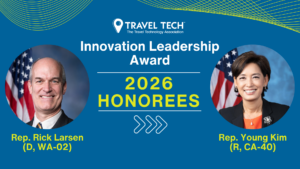
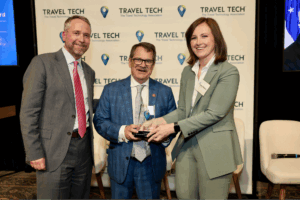
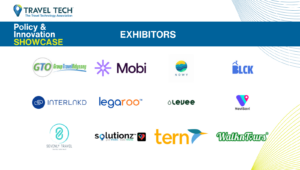
Wednesday, May 20, 2026 — The Travel Technology Association (Travel Tech), a non-profit organization dedicated to promoting and protecting the travel technology industry, will honor Rep. Rick Larsen (D-WA), Ranking Member of the House Transportation & Infrastructure Committee, and Rep. Young Kim (R-CA) with Travel Tech’s Innovation Leadership Award at its third annual Policy & Innovation […]